
Supply Chain Smart: Prefab’s Role in Combatting Delays
- chriscrawfordbills
- Jan 12
- 4 min read

When supply chains wobble, business plans stall. From 2020 onward, every developer, franchisee, and operator has learned how quickly a missing part or delayed shipment can halt progress and bleed cash flow. Prefabricated and modular construction aren’t just faster ways to build—they’re smarter ways to insulate projects from disruption.
The Persistent Pain Points
While some commodities have stabilized, many critical assemblies continue to dictate schedules. Electrical gear still drives the timeline: switchgear, panels, and breakers can run 30–50-week lead times, well beyond pre-2020 norms. HVAC equipment remains in flux due to the 2025 refrigerant transition from R-410A to new A2L blends such as R-454B. Freight costs have leveled off from their pandemic peaks but remain unpredictable, and base materials like steel and gypsum still price 20–40 percent higher than in 2020.
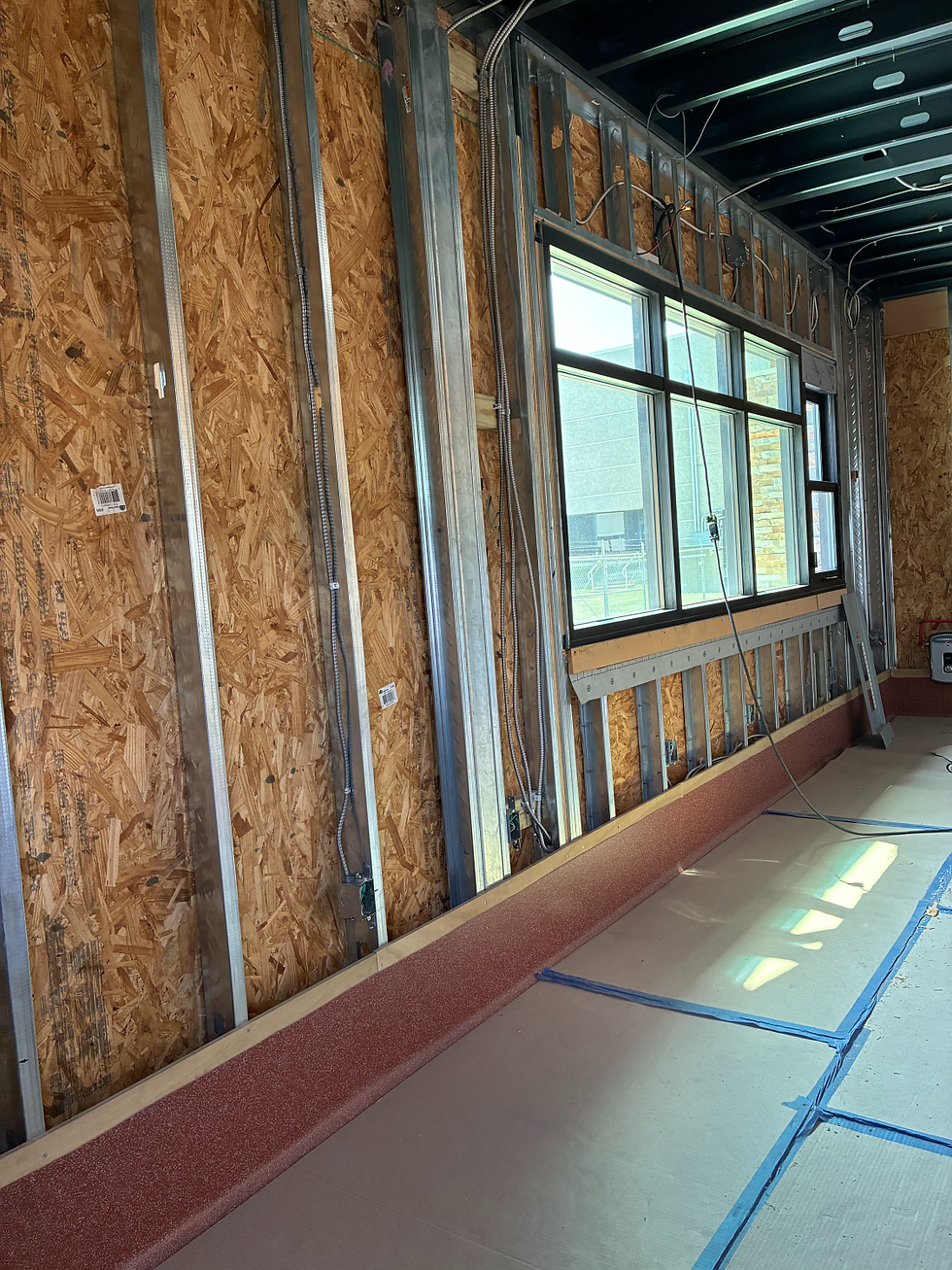
Certain sectors are hit harder than others. Theme parks and attractions face the greatest risk, relying on custom finishes, specialty lighting, and owner-furnished show systems. QSRs and food retailers fare slightly better with standardized layouts, though stainless fabrication and food-service equipment can vary in availability. Retail pop-ups and smaller footprints see the least turbulence—flexible finish packages and standardized MEP kits allow quick substitutions when vendors slip.Precision-engineered MEP assemblies inside a factory environment.
Parallel Progress: The Modular Advantage
Compared with site-built projects, modular and prefab structures are typically delivered 30–50 percent faster from permit to open. That speed isn’t just about assembly—it’s about sequencing. In a modular workflow, site preparation and factory fabrication occur simultaneously. While foundations are poured and utilities extended, the building is being constructed in a controlled environment with trades working in parallel rather than in sequence.
Creations Global’s approach leverages regional and global vendor partnerships to pre-procure long-lead items and integrate them into builds immediately upon arrival. By doing so, materials move straight from delivery to production, keeping workspaces cleaner and schedules tighter. Factory fabrication also eliminates common field risks—weather delays, labor shortages, and even theft or vandalism of MEP components.
Factory-Controlled Efficiency
Inside the plant, staging and sequencing are precise. Materials are received, verified, and instantly integrated into the production line to maintain flow. For high-frequency designs like quick-service restaurants or retail kiosks, maintaining a stocked inventory of core materials including steel framing, insulation, and MEP kits cuts procurement cycles and maximizes cost savings.
When changes arise, rapid internal review with the client ensures continuity. Last-minute change orders are reviewed immediately to prevent project stalls and meet deadlines. Roughly half of total project time runs in parallel between the factory and the site, and in many cases, the building is finished well before the ground is ready.
Transparency builds trust. Factories should be open to clients and inspectors to see progress firsthand. That openness reassures owners and authoritative representatives that modular quality meets or exceeds on-site standards.

Case Studies: From Concept to Commerce
At Mountain View Village in Utha, modular steel-frame buildings transformed an underutilized area into active retail in a single day. Because the units were fabricated off-site, every element—from structure to finishes—arrived ready to connect, avoiding all weather and trade-coordination delays.
In New York City, LovePop Store’s prefabricated design allowed installation within a week and eliminated disruptive on-site work in a high-traffic location. Parallel workflows reduce downtime and accelerate opening dates. There’s no need to wait for one discipline to finish before the next starts.

Modular’s flexibility also extends to logistics. In some cases buildings are transferred to a different venue altogether because the site wasn’t ready. Modular provides another element of flexibility to clients because of the speed at which buildings can be completed.
For repeat clients, state modular certification programs often allow designs to be replicated from project to project, enabling manufacturers to build multiple stores simultaneously and maintain a ready inventory for rapid deployment.
The Economic Equation
Creations Global attributes roughly half of total schedule savings directly to modular’s supply-chain resilience—its ability to sidestep bottlenecks, material shortages, and shipping delays. The financial translation is straightforward: earlier openings mean faster ROI, shorter loan-interest periods, and the ability to capitalize sooner on accelerated depreciation options such as Section 179 and 7- to 15-year MACRS property classifications. Add in waste reduction and sustainability benefits, and modular quickly becomes a financial strategy as much as a construction method.
Across comparable projects, modular construction consistently eliminates at least two to three months of idle site time, often the difference between a project under budget and one that drifts into overruns.
Certainty by Design
For businesses expanding in an uncertain world, modular construction offers what traditional methods can’t: control. Building within a controlled environment allows manufacturers to monitor the entire construction process from start to finish. That provides certainty a project will be delivered on-time with no supply-chain delays.


Comments