
Shipping Container Conversions: Form, Function or Fad?
- chriscrawfordbills
- Aug 6, 2025
- 2 min read
Updated: Aug 21, 2025

Over the past decade, shipping containers have exploded in popularity as “cool,” fast-track solutions for pop-up restaurants, kiosks, bars, retail concessions and more. They’re often seen as a way to launch a business quickly and cheaply. But is that perception grounded in reality?
At first glance, the appeal is obvious: containers are industrial, edgy, and photogenic. But beneath the surface, many operators discover that what they gained in form, they lost in function—and code compliance.
The Allure of the Box
Containers have a certain street cred. They’re bold, recognizable, and project an “eco-conscious” vibe. They look great in renderings and on Instagram.
But that visual appeal can mask serious drawbacks.
Design Limitations = Operational Constraints
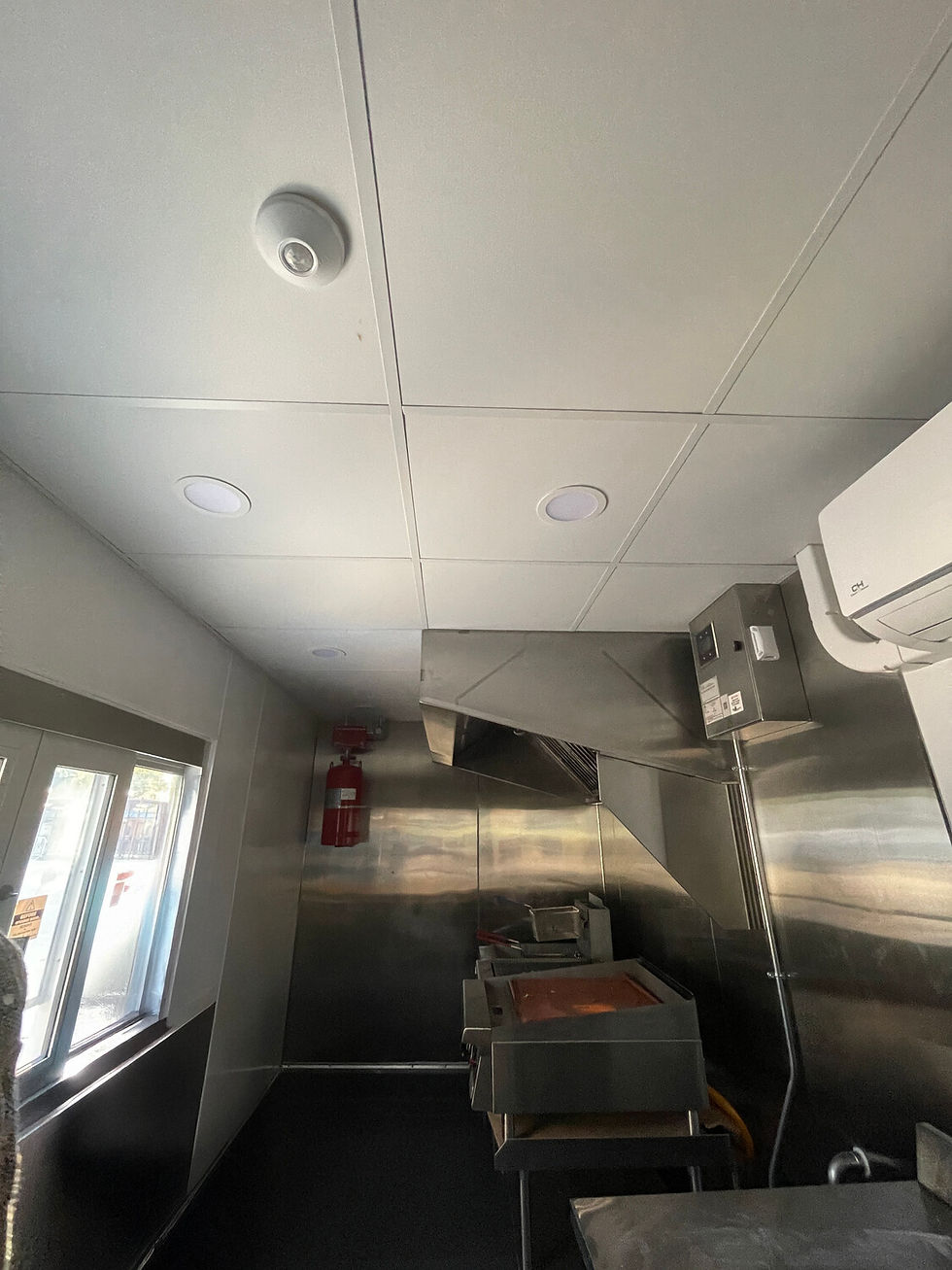
Shipping containers are only 8 feet wide—narrower still when you add insulation. That’s a tight fit for kitchens, prep areas, customer counters, or ADA restrooms. Retrofitting to add these essentials isn’t just expensive—it can compromise workflow and compliance.
You can cut windows and doors, but that affects structural integrity. You can stack them, but you’ll still need major reinforcements to meet building code. And when all is said and done, you’re often spending more trying to make a shipping container behave like a building—when it was never designed to be one.
The Modular Advantage
Unlike shipping containers, modular buildings are engineered from the ground up to meet commercial needs. Want a 14-foot-wide kitchen? No problem. Need built-in HVAC, electrical, or plumbing systems that are up to code? Already integrated.
Modular structures offer:
More design flexibility
Larger usable space
Improved energy efficiency
Faster permitting & inspections
Better long-term durability
Plus, they're manufactured off-site under controlled conditions—meaning higher quality, fewer weather delays, and faster time to operation.

Why Settle?
Shipping containers had their moment. But that moment was built on novelty, not necessity.
For operators serious about throughput, compliance, and customer experience, modular buildings offer a better path. They’re not just a building, they’re a strategic asset.
Form is important. Function is critical. Fads fade. Choose a solution designed to last.
In the end, it’s about building smarter. Shipping containers may turn heads, but modular buildings are built to turn profits - safely, efficiently, and at scale. For food & beverage operators, retailers, and venue managers who prioritize compliance, performance, and long-term value, the choice is clear. Don’t compromise your vision to fit inside a box. Build for today and tomorrow - with modular.


Comments